


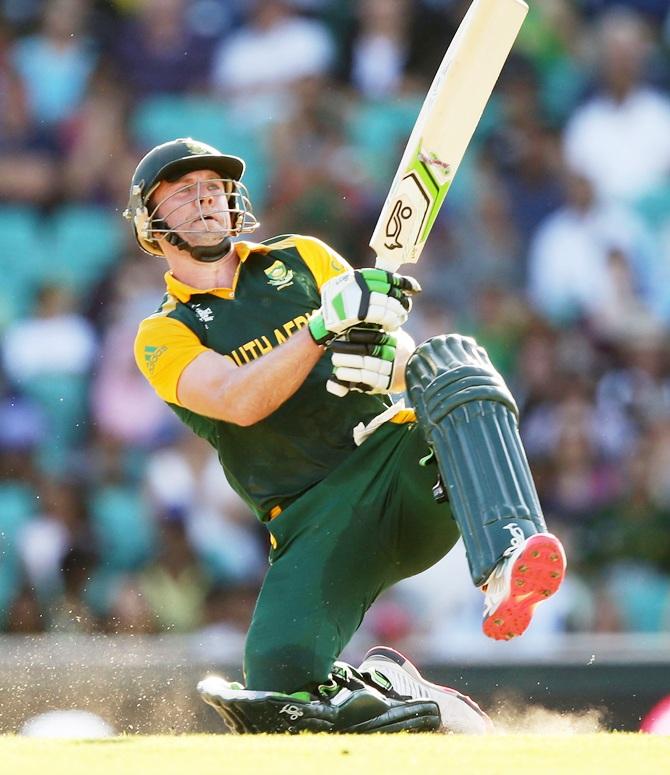
The Rise of the Modern 360° Batter
Back before the early 2000s, cricket came with a number of stereotypes. Shots on leg side involved power and aggression. Shots on the off side meant class and elegance. Batters practiced all sorts of particular strokes which were tailor-made for the deliveries they would face on the field.
As times went by, new formats emerged. To chase higher runs per over, aggressive batting was required and hence there was the necessity of innovative shots.
The Baby Steps
With the rise of T20 in 2004 and friendly tournaments here and there, we witnessed a change in batting styles.
At first, there was the scoop shot by Sri Lankan batter Tillakaratne Dilshan who used a pretty unconventional, axe-handed shot to flick the ball over the wicketkeeper for a boundary or six behind.
Then, there was the helicopter shot by Mahendra Singh Dhoni. He would swing the bat like a whip, weaponising the lower portion of the bat against lethal yorkers. This shot helped him finish a number of matches with ease and also broke a sort of psychological barrier, which batters had against good length to yorker deliveries.
Imagine you'd bowl to a right hander and he suddenly turns left-handed. Being ambidextrous was clutch. Such a move would seriously baffle the bowler and that's where players like Kevin Pietersen succeeded. This shot gained massive notoriety not just in English cricket but dominated T20 games in its initial phase - from World Cups to IPL and even CPL.
Matthew Hayden was another unconventional example, not just with his power-hitting but even with his unconventional bat. Hayden looked past the traditional bats with one flat side and opted for Mongoose: a bat which had two flat sides; coupled with a 43% longer handle. The idea was simple. Less blade. More swing. More chances of boundaries. The reality, however, was much disheartening.
While some experiments failed, some stayed the test of time.
The Evolution
Gradually, the numerous unconventional shots culminated as the ultimate skilset in a T20 match: something that would make a batter an ultimate nightmare for the bowler, or the 360° batter. The 360° batter was so named due to his ability to hit every possible delivery all round the park. The first one which comes to the mind of any cricket fan is the South African batter, AB de Villiers.
Scoop wasn't a gamble any more. It was something which was attempted multiple times with precision every other match. The reverse lap wasn't desperation, it was struck by design. Such a style of batting ensured the field was painted like a canvas; shots all around. Such shots forced bowlers out of their comfort zones and their predictable speed and swing/seam movements.
Over time, the coaching style changed. Flicking, switch hits and other unconventional strokes were now practiced on grounds. Coaches, who were once guardians of traditional angles, now had to adapt to the new style of the game. Young players are forced to be innovative and on their feet to practice such shots when time arrived.
Gradually, there was the rise of other such batsmen like Jos Buttler, switching between classic shots and unconventional ones with natural ease; something that was seen in all its glory against Kolkata Knight Riders (KKR) in IPL 2024. KKR posted a mammoth total of 223/6. While chasing, Rajasthan Royals (RR) were struggling at 121/6 at the end of the 13th over. With efforts from Buttler's 107 not out from 60 odd balls, RR managed to sail over the fence with a victory of two wickets.
Another famous name amongst the modern 360° batting style is Suryakumar Yadav, often abbreviated as SKY360. Flicking good length balls over fine leg is the norm for him. Gaps weren't just found, but carved. Putting a yorker behind point showed how a generation grew up without fear or constraints of orthodoxy.
The necessity of 360 batting only grew with time. Strike rates, fours and sixes became as important as averages. While IPL became a launch pad and torchbearer of such batting, the influence gradually spread to the western hemisphere in CPL, where 200+ scores became common and flashy hitting became synonymous with Calypso-style batting.
The Science Behind the Art
Anomalous shots became the norm and what was considered risky, was now a hard-to-master technique. The 360° batting involves lightning-fast hand-eye coordination. Within a fraction of second, the batter needs to read all the cues - bowler's feet, seam angle, release point and even wrist - and create an angle which allows him to navigate his shot selection across all corners of the ground. At the same time, the batsman needs to be careful regarding the balance. Some shots require extremely low centre of gravity and unlike earlier times, it's common to see batsmen roll on the ground trying to scoop a ball over the extra cover. Such shots aren't reckless but calculated audacity.
[Authored by Shreyan Laha]
[Photo by: Getty Images]