


The Vanishing Thunder: Why Fast Bowlers Are Losing Their Edge in Modern Cricket
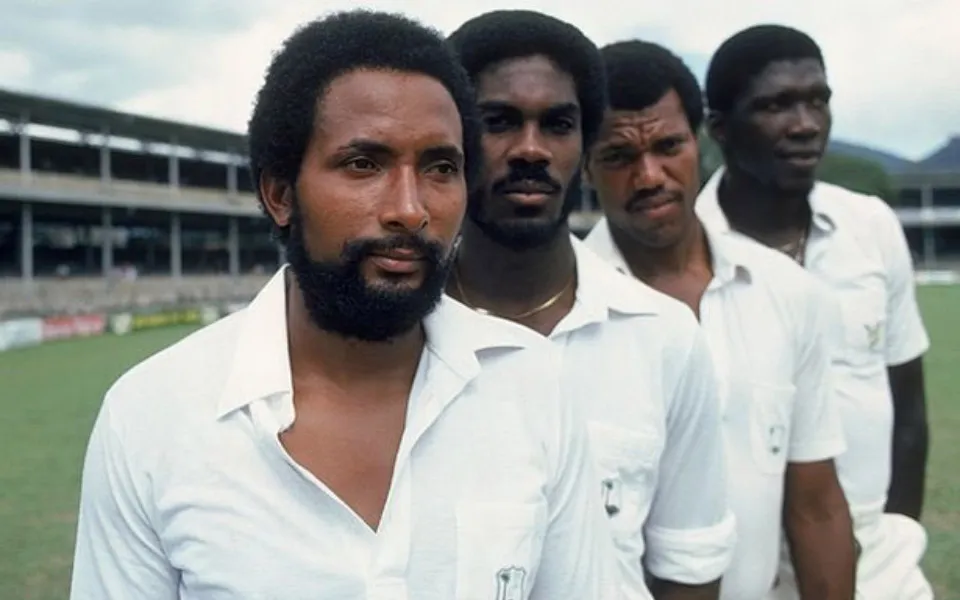
The sheer sight of a fast bowler charging down the pitch and swinging a thunderbolt exceeding 150 km/h has always been a thrill to watch - from the firebolts in the 1970s West Indies like Curtly Ambrose and Joel Garner to the Australians like Shaun Tait or Brett Lee post 2000s.
Yet, there has been a noticeable shift. Bowling speeds have declined over the last decade. While these thunderbolts still exists, it is less frequent and often replaced with variations of swing and seam. Such an evolution was not by accident. It is a result of multiple, interconnected changes in the sport.
One such reason is the rise of IPL and other T20 leagues happening around the world. Today, the cricketing calendar is heavily packed with tournaments such as franchise leagues, various bilateral and trilateral series. Fast bowlers have to play far more matches than what their predecesors had to play. As a result, the chances of injury increases and bowlers know this fact. Hence, they reduce their speed to stay fit, maintain longevity and be available for the national team.
Another reason why bowling at maximum speeds are reduced because bowling coaches often discourage their bowlers to go full throttle. Coaches know that fast bowling has one of the most physically demanding actions in sport - with stress on the back, knees and ankles. These days, teams employ advanced science, workload management and physio - for reducing injuries, stress and increasing longevity.
Third and most crucial element is the changing nature of the wicket and playing conditions. Pitches these days are batting-friendly, especially in the limited over formats. A 150+ km/h ball can easily be guided towards the boundary by opening the blade of the bat. Instead, the success lies in variations, accuracy and even a slower ball here and there. Bowlers, too, have adapted in a similar manner.
Subsequently, the batting has also evolved. Batsmen too, play with increased protection, innovation and aggression. There are zero chances of error for a bowler and the bowler knows that deception and unpredictability works better than sheer speed.
In T20 cricket, the emphasis is on execution and precision. Bowlers are trained to be precise with their yorkers and wide lines instead of depending on raw pace alone. Less players focus on Test cricket. Such skill-based approach trades control for aggression. The game is centred around outsmarting the batsman rather than crippling them with brute strength. Adding on another layer of complexity, is the fact that we live in the age of data. Opposing teams now has detailed information about various metrics like pitch conditions, history and even the bowlers.
Then, there are rotational policies and how bowlers approach their craft. Teams manage player fitness and often rest bowlers across various series. Overall, this leads to a situation where there is no incentive to push one's physical limit beyond what is expected of them.
Last but not the least are psychological factors. With increased protection, batting friendly pitches and all in all, completely data-driven atmosphere, the fear associated with extreme pace has diminished. Modern batsmen train with high-speed bowling machines from a very young age and this familiarity reduces the intimidation factor.
Fast bowling hasn't disappeared altogether. With names like Mitchell Starc, Jasprit Bumrah and Mark Wood, the fire still explodes but in occasional bursts. The change in absolute top speeds of fast bowling, when closely observed reflects how the game has evolved overtime. Fast bowlers are no longer just speed merchants with fireballs but skilful craftsmen who could take wickets to their rhythm.
[Authored by Shreyan Laha]