


Trump Says, "I Don't Want to Deal with Them Anymore." Is the Middle East Heading Towards Another Dan
U.S. Strikes Iran Again, Tehran Threatens America: Has the Middle East Reached the Point of No Return?
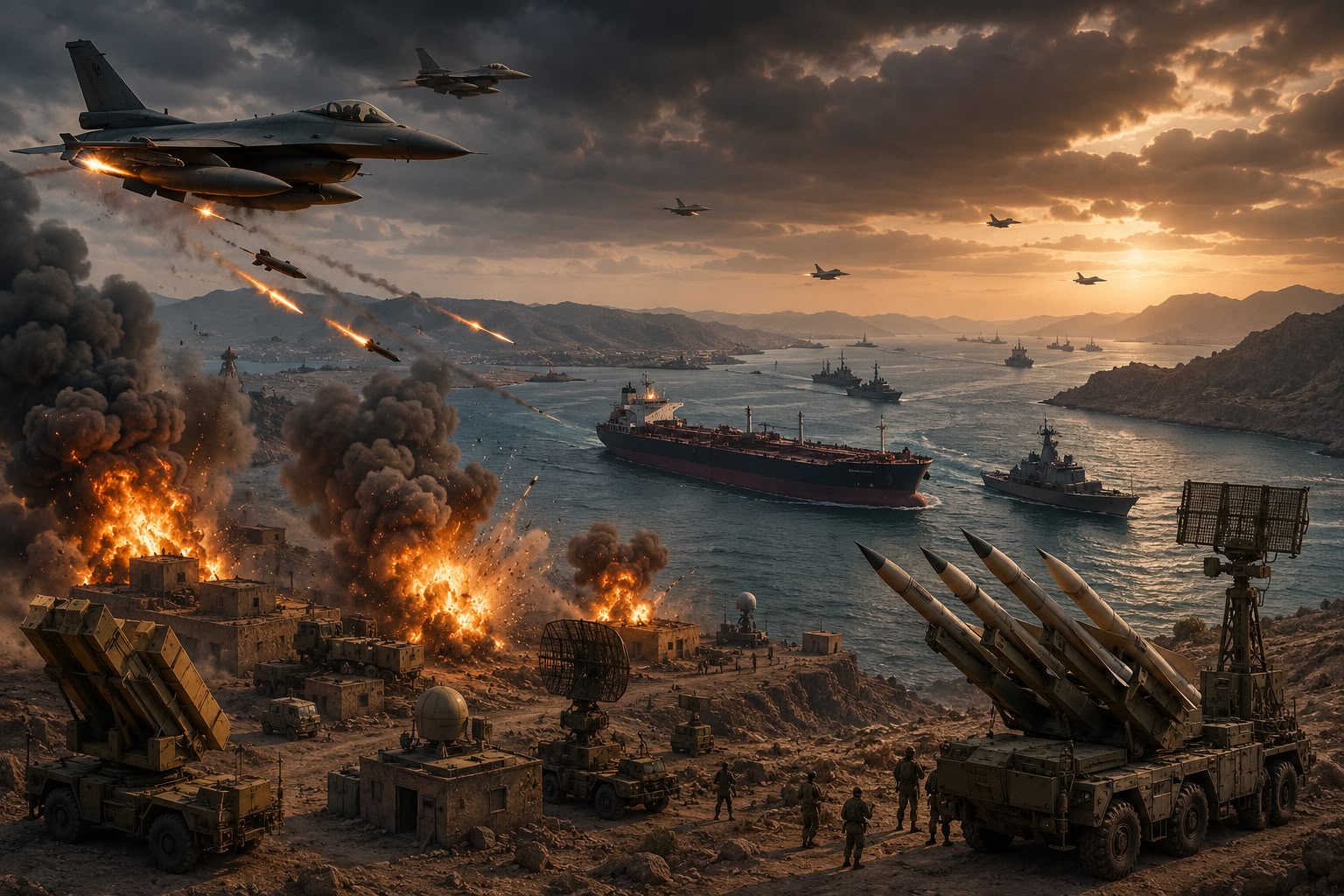
Just when the world hoped the Middle East was moving away from another major conflict, the region has taken a dangerous turn.The latest escalation began after the U.S. Central Command (CENTCOM) announced a fresh wave of military strikes targeting multiple sites inside Iran. Washington says the strikes were aimed at degrading Iran's military capabilities and holding Tehran accountable for threatening international shipping and freedom of navigation through the strategically vital Strait of Hormuz.
Iran's response has been swift and extremely aggressive.
Iranian officials and hard-line voices have warned that if the United States expands its military operations, American forces will pay a heavy price. Some Iranian figures have even declared that no American soldier would return alive from a wider conflict, while others have threatened that Americans within Iran's reach could become targets if the war escalates further.
These warnings came amid heightened military activity around Qeshm Island and the Strait of Hormuz, where Iran has once again demonstrated its strategic strength and warned that it will not tolerate what it calls American aggression near its territorial waters.
The question now is no longer whether tensions are rising.
The real question is: Has diplomacy completely collapsed, or is the world standing on the edge of another major Middle East war?
How Did We Get Here?
Only days ago, there was cautious optimism that diplomacy might prevent another devastating conflict.
But that optimism disappeared almost overnight.
President Donald Trump publicly declared that the ceasefire understanding was effectively over, saying,
"I don't want to deal with them anymore."
According to Washington, Iran failed to honour the understanding and continued actions that threatened regional security.
From Trump's perspective, negotiations had become meaningless.
From Iran's perspective, the latest American military strikes proved that Washington never intended to build lasting trust.
And so, diplomacy once again gave way to missiles.
Why Does Trump Say Iran Wants Him Dead?
Trump has also repeated a statement that has attracted global attention.
He says he remains at the top of Iran's assassination list.
The reason goes back to January 2020, when he ordered the strike that killed General Qasem Soleimani, one of Iran's most influential military commanders.
For Iran, Soleimani's death remains an open wound.
For Trump, the repeated threats against him are proof that Iran cannot be trusted.
Six years later, that single decision continues to shape one of the world's most dangerous geopolitical rivalries.
The Real Battlefield now is The Strait of Hormuz:While missiles dominate the headlines, the real battle may be unfolding far from the skies across one of the world's most strategically important waterways: the Strait of Hormuz.
This narrow maritime corridor carries nearly 20 percent of the world's traded crude oil and a significant share of liquefied natural gas. It is, in many ways, the economic lifeline of the global energy market.
And the impact is already being felt.
Even the fear of disruption has created volatility in global oil markets, pushed up insurance premiums for commercial vessels, and increased shipping costs. Energy-importing nations are closely monitoring every development because uncertainty alone is enough to shake global markets.
But if this conflict intensifies further, the consequences could be far more severe.
A prolonged disruption in the Strait of Hormuz could send oil prices soaring to levels not seen in years. Fuel prices could rise across continents, inflation could return just as many economies are beginning to recover, supply chains could once again come under immense pressure, and the cost of transporting everything from food and medicines to electronics and industrial raw materialscould increase dramatically.
For developing economies, the burden would be even greater. Governments may be forced to spend more on energy imports, industries could struggle with rising production costs, businesses could face shrinking profits, and ordinary families would ultimately pay more for everyday necessities.
In today's interconnected world, a conflict in the Gulf does not remain in the Gulf.
It can influence the price of fuel at your local petrol station, increase the cost of groceries on supermarket shelves, slow economic growth, unsettle financial markets, and even affect employment as businesses struggle with rising costs.
That is why the Strait of Hormuz is not merely a strategic waterway.
It is one of the world's most critical economic arteries.
Now, What Happens Next? Let's speculate.
The region now stands at a crossroads.
The first possibility is controlled escalation where the United States, Iran, and Israel continue limited military operations while carefully avoiding a full-scale regional war. This has often been the pattern in the Middle East: enough force to send a message, but not enough to trigger an uncontrollable conflict.
The second possibility is far more dangerous.
A single miscalculation whether an attack on a U.S. military base, a strike on critical oil infrastructure, or the sinking of a commercial vessel in the Strait of Hormuz could rapidly draw more countries into the conflict, transforming a regional crisis into an international one.
There is also the growing possibility of economic warfare becoming just as significant as military warfare. New sanctions, cyberattacks, disruptions to global trade routes, and financial restrictions could damage economies far beyond the battlefield.
And yet, despite the aggressive rhetoric from both sides, history reminds us that diplomacy often returns when the cost of war becomes unbearable.
The question is not whether leaders can still negotiate.
The question is whether they will choose dialogue before another irreversible mistake changes the course of history.
Conclusion
The collapse of the ceasefire is not simply the failure of one agreement.
It represents the collapse of trust.
The latest U.S. military strikes, Iran's threats against American forces, President Trump's declaration that he no longer wants to negotiate, and the growing tensions around the Strait of Hormuz all point toward one reality:
The Middle East is entering another unpredictable and potentially dangerous phase.
And before we end, here are a few questions the world should seriously be asking:
Has diplomacy become nothing more than a brief pause between military operations?
Could the Strait of Hormuz become the spark that triggers the next global economic crisis?Will increasing military pressure force Iran to compromise or strengthen its resolve? Can Israel achieve lasting security through military deterrence alone?
And finally, are we witnessing the beginning of a much larger regional conflict, or is there still one final opportunity for diplomacy before the next missile changes history?
The answers to these questions will not shape only the future of Iran, Israel, or the United States. They may well determine the future of global peace, economic stability, and the geopolitical order for years to come.