


China Moves Towards the Strait of Hormuz: Is the Gulf Becoming the Next Great Power Battleground?
China Moves Towards the Strait of Hormuz: Is the Gulf Becoming the Next Great Power Battleground?
Just when the world believed the Strait of Hormuz had become a flashpoint between the United States and Iran, another powerful player has entered the scene.
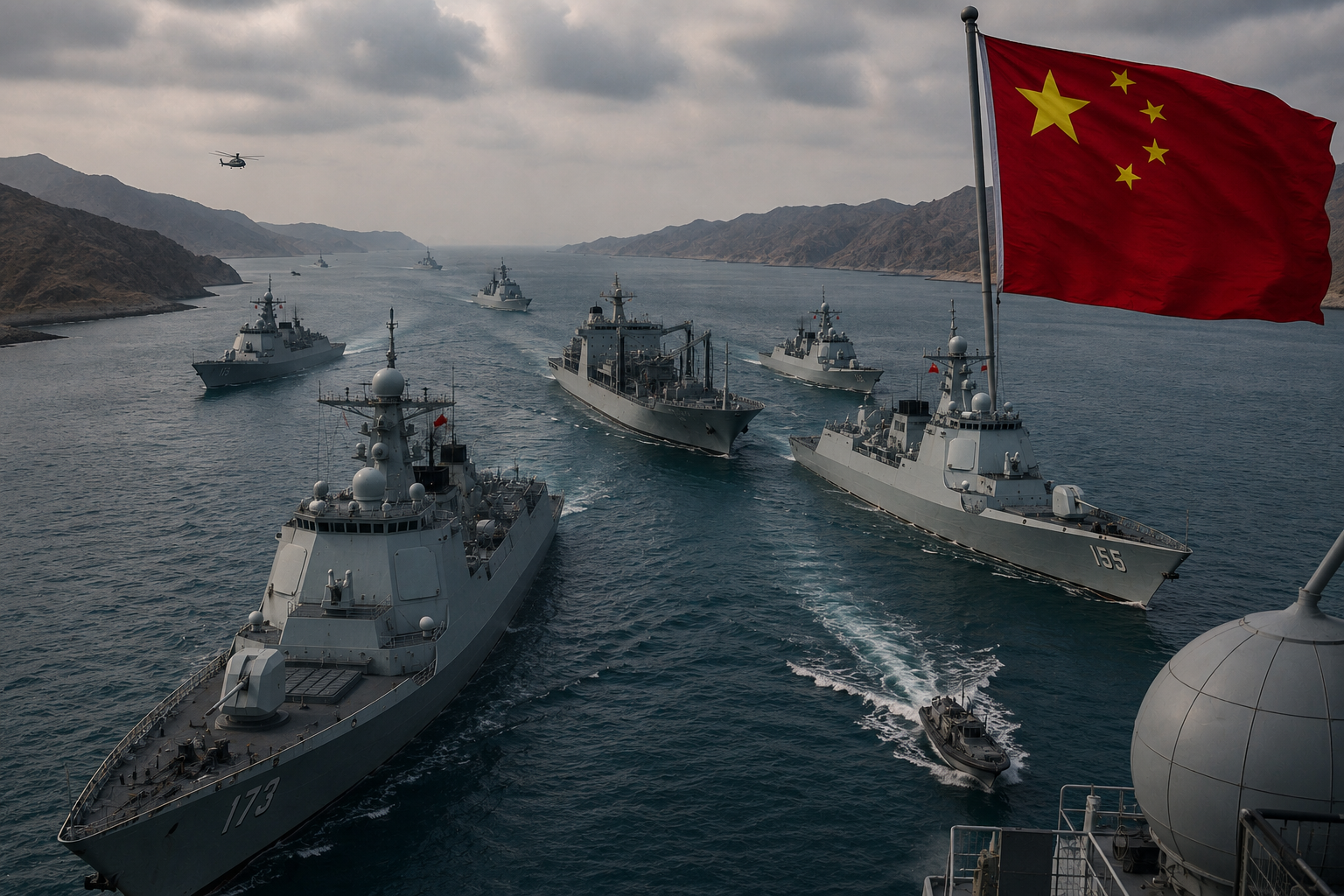
China has begun moving naval assets towards the Gulf, adding an entirely new dimension to an already volatile crisis.
This is no longer just a confrontation between Washington and Tehran.
It is fast becoming a contest over influence, trade, energy security, and the future balance of global power.
Why Has China Moved Its Naval Assets?
At first glance, Beijing's move appears straightforward.
China depends heavily on energy imports from the Middle East, and any disruption in the Strait of Hormuz threatens its economy. Protecting vital sea lanes and ensuring the uninterrupted flow of oil is therefore a strategic necessity.
But there is a much deeper story.
Over the past few years, China has steadily strengthened its relationship with Iran through long-term economic partnerships, infrastructure investments, and joint naval cooperation with Iran and Russia.
Unlike the United States, whose influence in the region is primarily military, China's influence is increasingly economic.
It understands that in today's world, controlling supply chains and investment can sometimes be as powerful as controlling warships.
What Does This Mean for the United States?
For Washington, this creates a far more complicated strategic picture.
The United States is no longer dealing only with Iran's military posture.
It must now consider China's growing presence in one of the world's most critical maritime corridors.
Every military decision now carries diplomatic and economic consequences.
Any escalation risks not only regional instability but also greater strategic competition between the world's two largest powers.
In many ways, this is no longer simply about securing a waterway.
It is about determining who will shape the future rules of global trade, maritime security, and geopolitical influence.
Why the Strait of Hormuz Matters More Than Ever
The Strait of Hormuz is far more than a narrow stretch of water.
It is one of the world's most important economic lifelines.
A significant portion of global oil and energy supplies passes through this corridor every day.
Even the fear of disruption can send oil prices higher, increase shipping costs, unsettle financial markets, and place fresh inflationary pressure on economies across the world.
That is why every naval movement in these waters is closely watched not only by governments, but also by investors, energy companies, and global markets.
What Happens Next?
China is unlikely to seek direct military confrontation with the United States.
Its strength lies elsewhere.
Beijing's greatest advantage is its economic influence, its role as a major energy buyer, and its ability to shape regional dynamics through investment and diplomacy.
The United States, meanwhile, continues to rely on its unmatched naval presence to secure international shipping routes.
This creates two competing models of power.
One built on military strength.
The other built on economic leverage.
Whether these two approaches remain in balance—or eventually collide—may define the next chapter of international politics.
Conclusion
The movement of Chinese naval assets towards the Strait of Hormuz is not just another military deployment.
It is a signal that the Gulf is becoming a stage where global powers are competing not only for security, but also for economic influence and strategic leadership.
The crisis is no longer just about Iran.
It is about the future of the international order itself.
And before we end, two questions deserve careful thought:
Is China entering the Gulf simply to protect its energy interests, or is it quietly positioning itself as the next dominant power in one of the world's most strategic regions?
And if the Strait of Hormuz becomes a theatre of rivalry between the United States and China, are we looking at the beginning of a new geopolitical era where economic power and military power compete side by side?
The answers may shape not only the future of the Middle East, but the future of global politics itself. for more updates and deepinsights, keepwatching the globali