


The Problem With Women's Perfumes
Perfumes were never meant to be divided along the lines of sex. Historically, men in the regions of India and Middle East applied rose itra (perfume oils) since times immemorial. Vetiver was a staple in Indian homes with dried curtains of vetiver, or desert coolers in which vetiver straws (khus) were lined throughout. Itra made out of vetiver was also considered unisex. Musk (which was historically extracted from deer instead of chemicals like muscone or musk ketone used today) was considered a royalty and used by the nobles, kings, queens alike. However, with the fast-paced world we live in and increasing consumerism, fragrance companies noted the inclination of various genders towards specific fragrance groups and marketed their products accordingly. So here we are today, with rose for women and musk for men.
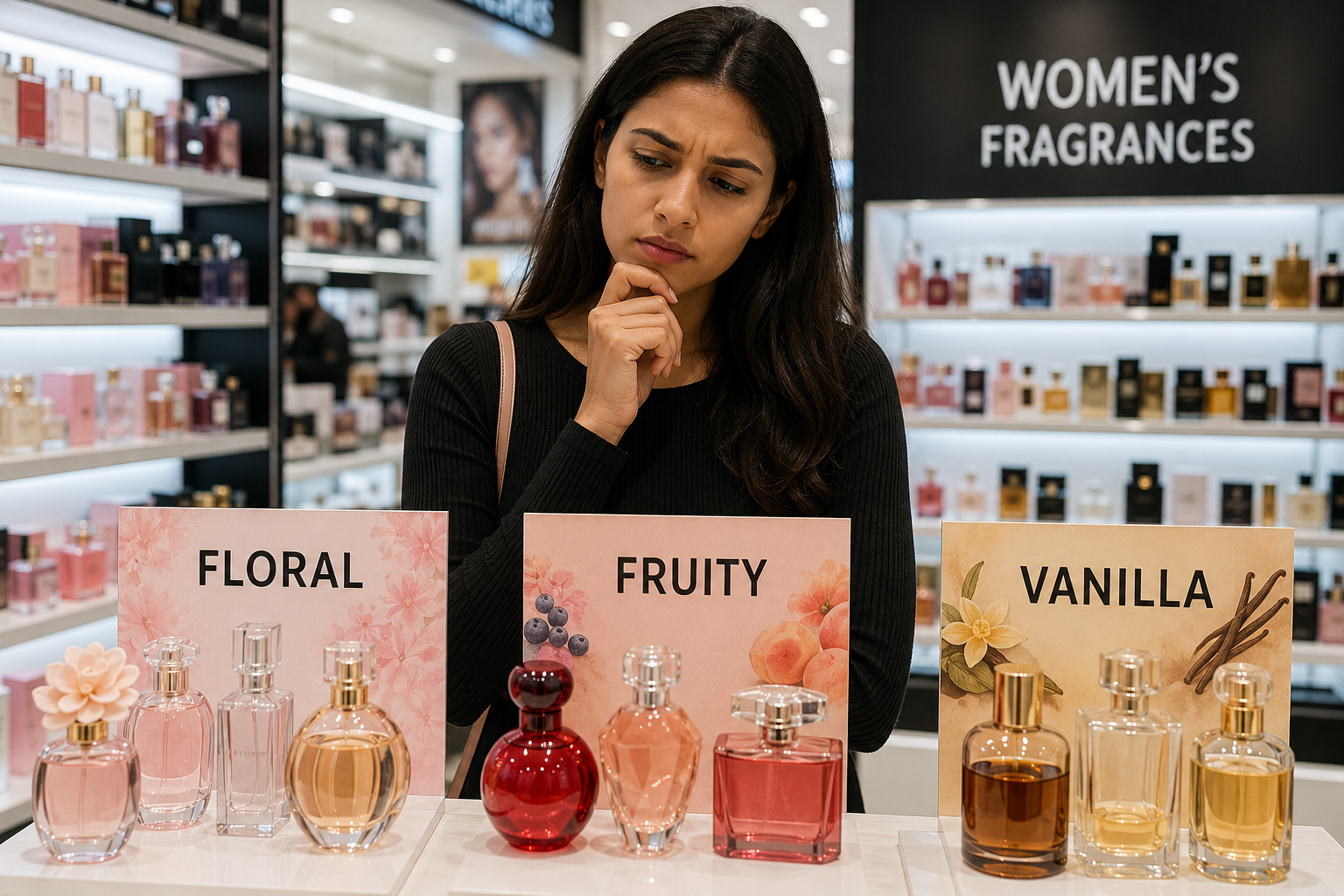
Adding on, whenever you approach a cosmetic store or a perfume shop and ask them to provide a perfume, invariably the seller would provide either of the three choices to you – floral, fruity or vanilla-heavy fragrances. Now imagine if it was the case with clothes. If you, as a woman, enter a store and you’re given the choice to buy clothes in three colours only. It would be absurd, isn’t it? As a result, we find women naturally gravitating towards unisex perfumes and even men’s perfumes.
Granted, we have to educate ourselves regarding the history of fragrances but with current standard of fragrance marketing, women’s fragrance deserves a wider olfactory variety. One of the most well-known women’s fragrances today is Elizabeth Arden’s Green Tea – so much so that if you ask different AIs about building a women’s fragrance collection, it would be one of the suggestions they would offer, but we need to ask why it got popular? This is because, it didn’t play according to the same floral-fruity rules and offered a fresh women’s scent which the scent of tea and citrus.
Another overlooked factor is the fragrance groups when it comes to women’s perfumes. There are few women’s fragrances with cedarwood, sandalwood or vetiver and ironically, fragrance industries which created this divide of men’s perfumes and women’s perfumes are solving them because how long would fragrances continue to be inspired by the likes of Chanel No 1 or Carolina Herrera's Good Girl? How long would the same formula work to impress their target consumers? These days, it's not uncommon to see plenty of new fragrance or new houses coming up who are not afraid to experiment with the likes of musk, sandalwood etc.
Last but not the least, there’s a weight which certain fragrance oils carry within a perfume. A rich vanilla or dense amber fragrance oil in the perfume would feel heavier and feels warmer than a citrusy fragrance. However, when we talk about women’s perfumes the vanilla-amber combination would more likely be recommended because it ‘feels more like a woman’ instead of considering the temperature where she resides. Influencers in the fragrance space too, rarely list women’s perfumes while recommending summer fragrance vs winter fragrance.
The solution lies in broadening the conversation. Consumers need to be more educated about the reality of fragrance, learning about the historical usage of such perfumes. Alternative examples like Afnan Rare Carbon, Maison Alhambra Dark Origami, Ahmed Al Maghribi Marj, Le Labo Santal 33 etc should be promoted more. The list is endless but since I do not require women's fragrances, these are few of the suggestions I can offer from the top of my mind. Third, wearing a fragrance shouldn’t limit you within boxes. It should be about expressing individuality, something which ideally doesn’t come in defined boundaries - a factor which fragrance companies; niche and designers alike are gradually moving towards.