


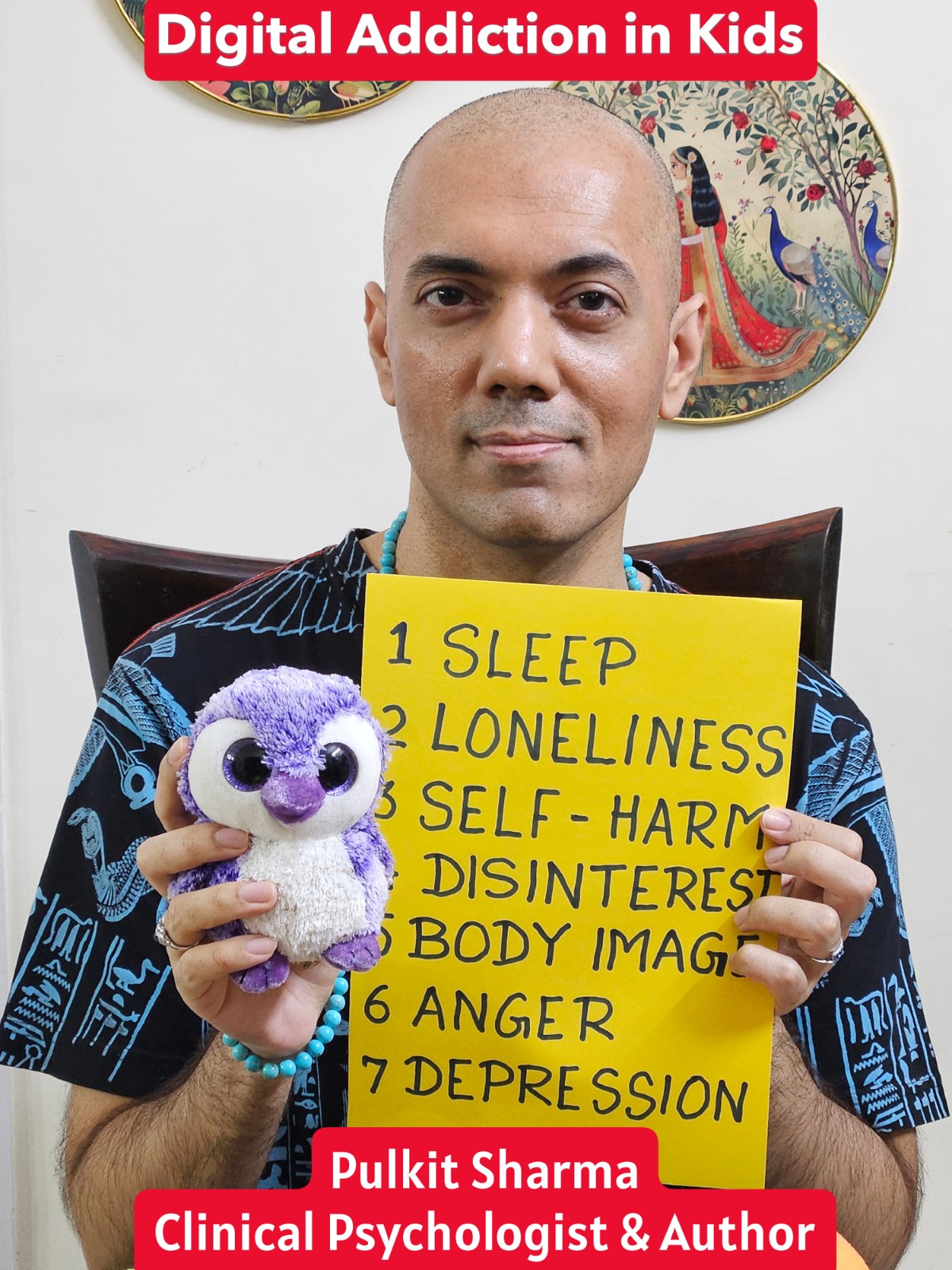
Pulkit Sharma: The Silent Healer in a Noisy World
Pulkit Sharma: The Silent Healer in a Noisy World
In a world that constantly celebrates noise, speed, fame, and surface visibility, a few rare souls quietly dedicate their lives to healing others without ever seeking applause. They do not stand on grand stages demanding attention, nor do they measure their impact through popularity or spectacle. Instead, they work behind closed doors, listening to broken hearts, holding space for wounded stories, and helping individuals rediscover the inner strength to live again.
One such presence is Pulkit Sharma, a clinical psychologist, psychoanalytic therapist, spiritual explorer, and author whose work has transformed lives across India and beyond.
For over two decades, Sharma has stood at the crossroads of clinical science, human vulnerability, and spiritual consciousness. In an era where mental health is frequently reduced to digital buzzwords and transient trends, his practice represents something enduring: a grounded understanding that emotional recovery is neither mechanical nor instantaneous, but a profound spiritual and human journey.
In this wide-ranging exclusive conversation with The Global i News, Pulkit Sharma opens up about the persistent stigma surrounding therapy, the modern epidemic of loneliness, the myths of quick-fix healing, and how ancient wisdom breathes life into modern psychology.
The Interview
The Global i News: Mental health conversations have become far more visible today, yet so many continue to suffer in silence. Why is seeking psychological help still such a barrier for people?
Pulkit Sharma: I have been working as a clinical psychologist and psychoanalytic therapist for almost two decades. Although there is growing awareness and greater acceptance nowadays compared to twenty years ago, a deep sense of shame and stigma still persists in our cultural unconscious. Deep down, people still hold archaic beliefs which convince them that strong individuals have a completely self-reliant mind and should never need assistance for emotional wounds.
Beyond stigma, there is a very practical hurdle: psychotherapy usually requires weekly or more frequent sessions, making it an extended commitment. This places a significant financial burden on individuals and their families. The sad truth is that many people either avoid seeking help altogether or quit prematurely because they find it unaffordable. In India, medical insurance still fails to cover intensive psychotherapy, leaving a massive systemic gap.
The Global i News: You are widely known for integrating modern psychology with spiritual philosophy. How do these two traditions complement one another to build emotional balance?
Pulkit Sharma: In clinical practice, I find that human beings exist across different layers of consciousness, and the resolution to their distress lives within those specific layers. While some individuals come seeking career direction, financial stability, healthy relationships, or everyday peace of mind, others arrive searching for profound inner stillness, freedom, and existential meaning.
When we integrate modern psychology with spirituality, we gain an expansive, consciousness-based framework. It equips us to address the full spectrum of the human condition, from raw psychological symptoms to the soul’s search for purpose.
The Global i News: Having listened to people for two decades, what is the single most pervasive emotional struggle you observe across generations today?
Pulkit Sharma: The definitive emotional crisis of our era is the pandemic of loneliness. Traditional communal and psychological anchor points are disintegrating, leaving individuals with nothing solid to hold onto. This absence of grounding has driven a mammoth surge in feelings of meaninglessness, depression, chronic anxiety, substance dependencies, and tragically, self-harm and suicide.
The Global i News: We frequently hear the adage "time heals all wounds." Does time alone heal, or does emotional recovery demand conscious intervention?
Pulkit Sharma: While time can dull the acute edge of painful memories and turbulent feelings, time by itself does not heal. Deep emotional injuries, subconscious fears, and unresolved trauma can remain lodged in the unconscious mind for decades. True recovery demands active, conscious effort, a willingness to confront our inner shadows and patiently untangle the emotional knots within.
The Global i News: Your book, When the Soul Heals, has touched readers across cultures. What inspired that synthesis, and what is its core takeaway?
Pulkit Sharma: Alongside my professional training in clinical psychology and psychoanalysis, I immersed myself in hatha yoga, kriya yoga, and meditation practices. Over time, I recognized that mainstream clinical tools could not resolve every psychological impasse. Certain deep-rooted suffering requires working on a plane of consciousness beyond the rational intellect.
When the Soul Heals was born out of that realization, an effort to unite rigorous clinical psychology with ancient spiritual wisdom. The core message I hope every reader absorbs is that within the quietest depths of their own being lies an inexhaustible reservoir of hope, healing, and genuine happiness.
The Global i News: On social media, everyone projects a curated, joyous existence, yet clinical rates of anxiety and depression keep climbing. What explains this dissonance?
Pulkit Sharma: The crisis lies in the gulf between appearance and reality: people project bliss, but internally they are crumbling. Social platforms thrive on curated highlight reels. Everyone feels compelled to demonstrate that they are radiant, thriving, and prosperous because that is what captures metrics and approval.
This curated perfection leaves zero room for the messy reality of human pain and vulnerability. When individuals continuously suppress their grief and inadequacy to maintain a façade, that suppression eventually fractures. The repressed pain returns like an emotional tidal wave, leaving them overwhelmed by acute anxiety and depressive episodes.
The Global i News: As a clinician who treats deep trauma, personality disorders, and addiction, what is the most damaging misconception you encounter regarding emotional recovery?
Pulkit Sharma: The belief that psychological healing can happen magically overnight. Too many people are misled by commercialized promises of rapid, effortless cures, which ultimately leaves them disillusioned and emotionally exploited.
Trauma is not merely an unpleasant event; severe emotional trauma physically and neurologically alters the brain, reshaping how an individual interprets safety, reacts to reality, and navigates relationships. Rewiring those deeply grooved pathways require patience, sustained effort, and deep self-awareness. There are no shortcuts through that terrain.
The Global i News: You were an early advocate for LGBTQ-affirmative therapy in India. How vital is it that the mental health ecosystem builds genuinely inclusive spaces?
Pulkit Sharma: From the very beginning of my clinical practice, supporting LGBTQ individuals was non-negotiable for me. In those early years, homosexuality was still criminalized under Indian law, and we had to do extensive advocacy simply to bring attention to the severe marginalization, discrimination, and isolation these communities endured.
While societal attitudes have progressed, harmful prejudice persists. It remains the ethical obligation of mental health practitioners and society as a whole to provide unconditional, safe sanctuaries. When marginalized individuals have a space free of judgment, they can finally voice hidden trauma, release internalized shame, and begin genuine emotional recovery.
The Global i News: Therapy work can be draining. Your personal pursuits include music, writing, nature photography, and travel. How do these outlets sustain you?
Pulkit Sharma: The emotional demands on therapists are intense, and professional burnout is a very real threat. Over the years, I have seen esteemed practitioners succumb to emotional exhaustion, substance reliance, depression, and loss of purpose because they neglected their own boundaries.
My creative and physical practices, yoga, writing, singing, and traveling into nature are vital shields. They clear out secondary trauma, protect my inner equilibrium, and restore my body and spirit. Whenever young psychologists seek my guidance or supervision, my primary counsel is always the same: you cannot pour from an empty vessel; your personal well-being must remain sacred.
The Global i News: If you could leave our readers with one guiding truth for emotional clarity and a fulfilled life, what would it be?
Pulkit Sharma: Remember that no trauma, symptom, or destructive habit is permanent. Within the core of your being exists a profound source of resilience, joy, and guidance. Healing begins the moment you stop running outward, tune into the quieter layers of your consciousness, and learn to trust that inner source.
The Work in Silence
Pulkit Sharma’s journey is not defined by traditional metrics of ambition or public celebrity. It is a testament to quiet vocation, a deliberate choice to favor empathy over personal acclaim, deep meaning over surface recognition, and genuine healing over fleeting attention.
In a world quick to look toward spectacles and influencers, the restorative work of healers like Sharma provides a grounding reminder: humanity’s most vital victories often happen quietly behind closed doors, where wounded hearts are patiently helped back to light.